Analyse a work of Graphic Design using quotes from others. (Focusing on comic sans)
http://www.comicsanscriminal.com/
This comic sans criminal
Showing posts with label OUCS205. Show all posts
Saturday, 26 March 2011
Friday, 25 March 2011
Task 6
As a designer have you ever used a stereotype to initiate communication? For instance an idea of youth as opposed to age or what it is to be female as opposed to male? Have you tried to communicate to an audience based on class stereotypes? Have you seen other designers doing this?
Sterotypes are reinforced by design because they work. The asthetics of something makes us associate a response, this is the semiotics of a piece. With stereotypes, a range of semiotic symbols have been gathered to form one.
This is stunting the growth of our understanding of others, most prominently in relation to other cultures. As we see the same images used to portray a culture, such as Chinese, we take it on board and it reinforces our stereotype, as nothing is being done to confront it.
From the two comparative pictures. I cannot see where this design stereotype has evolved form. As designers and throughout advertising especially, stereotypes are used because they work. They easily denote a thought and association. We can communicate really easily with the use of these, to a large audience, but we are communicating the wrong this on a large scale. This way of communicating is using redundant techniques such as high predicatability to communicate to a large audience.
Previously, I have used stereotypes in my design to communicate Vogue. I aimed it specifically at women and so used pink, a symbol of a woman and hand-drawn, girly writing. Looking back I am very dissapointed in this piece and is one of my worst bit of work.
Sterotypes are reinforced by design because they work. The asthetics of something makes us associate a response, this is the semiotics of a piece. With stereotypes, a range of semiotic symbols have been gathered to form one.
This is stunting the growth of our understanding of others, most prominently in relation to other cultures. As we see the same images used to portray a culture, such as Chinese, we take it on board and it reinforces our stereotype, as nothing is being done to confront it.
![]() |
| Chinese restaurant in China |
![]() |
| Chinese restaurant in England |
![]() |
| Yes, this is real. With 664 members and 10,645 photos... |
From the two comparative pictures. I cannot see where this design stereotype has evolved form. As designers and throughout advertising especially, stereotypes are used because they work. They easily denote a thought and association. We can communicate really easily with the use of these, to a large audience, but we are communicating the wrong this on a large scale. This way of communicating is using redundant techniques such as high predicatability to communicate to a large audience.
Previously, I have used stereotypes in my design to communicate Vogue. I aimed it specifically at women and so used pink, a symbol of a woman and hand-drawn, girly writing. Looking back I am very dissapointed in this piece and is one of my worst bit of work.
![]() |
| Vogue |
Wednesday, 23 March 2011
Globalisation, sustainability and the media lecture
Globalisation
In an extremely basic interpretation of globalisation is the spread of ideas according to the stansford university encyclopedia of philosophy.
George Ritzer
coined the term 'McDonaldisation' to communicate the way in which the fast-food business approach is being applied to more sectors of society.
Marshall McLuhan
foretold the internet, much as George Orwell foretold the CCTV society of today. What else is possible?
Global village
'If the global village is run with certain set of values then it would not so much be an integrated one as an assimulated one'. A handful order the rest of the world what to look at and what should be viewed b the rest. Big names are Rupert Merdoch and Time Warner.
Greenwashing
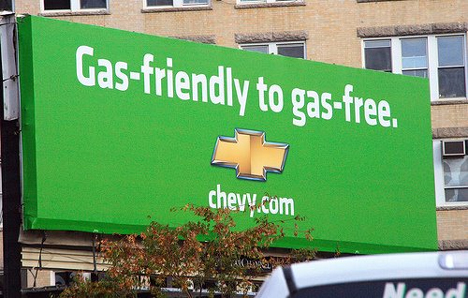
Basically slap some green on an advertisment and it will instantly look environmentally friendly. Sure...
Task 5
Read the text- Balser, E (2008) 'Capital Accumulation, Sustainability & Hamilton Ontario'. We have copies in the CTS office, 115.
Write a 500 word critical summary of the text which explicitly adresses the following questions
How is sustainability defined in the text?
What are the main characteristics or tendencies of Capitalism
Define a 'crisis of Capitalism'. Offer an example.
What solutions have been offered to the sustainability question? Are these successful or realistic? - If not why are they flawed?
Is the concept of sustainability compatible with Capitalism?
Write a 500 word critical summary of the text which explicitly adresses the following questions
How is sustainability defined in the text?
What are the main characteristics or tendencies of Capitalism
Define a 'crisis of Capitalism'. Offer an example.
What solutions have been offered to the sustainability question? Are these successful or realistic? - If not why are they flawed?
Is the concept of sustainability compatible with Capitalism?
Tuesday, 22 March 2011
Task 4
"Who says what in what channel to whom with what effect?" is the principle of communication theory in regards to Shannon and Weaver model. I thought a good example would be one which works and I could explain and learn for myself why I remember it and how I could possibly use these elements in future. The one which stood out to me is a collection of graffiti recently appearing in Leeds. With street art, you can tell a definite style to someones work and see a collection of it, even if they have not been identified as a collective. We know there is someone trying to communicate with us, but we never see the person, only their message.
These have been plastered to the streets in busy areas, but not at eye level. There is limited noise around the graffiti which is uncommon. Once one person tags a wall, another and another and another do the same it seems. To reduce the impact of noise even more, the medium on which this is made is unusual for the purpose. Newspaper. The artist is not damaging street property, but is making his art more high-end through appearing in the same format as a poster. Colour reduces noise even further, against the dark background, the pink and brightness of the medium shine out and grab our eyes attention. We recieve a message even at a glance. Entropy is essential in these designs, unpredictability make them stand out among all the stereotypical takeaways and pubs. A high level os information is built into these (a picture tells a thousand words) but at a glance, we only recieve a small amount of this. Due to this it is important that the impact is high and continued.
The areas in which I have seen these designs have been on streets heavily used by students. Near Woodhouse (Raglan Road) and along Woodhouse Lane. The more you see of these works, the more impacted they become on our memories, and so this is aimed at students, as these are the primary walkers of these streets and see both works.
Noise can be created by other artists, and even though another piece of work is not near these, I find myself thinking about them both the equal amount, possibly to me I put them in the same category as being different and interesteing that they merge as one collection in my mind. This is damaging to the reputation as one, as it is not seen as simply 'one' anymore. These other works I have seem have a more digital and finished look to them, and communicate with a less obscure voice. The message is still difficult to decode as through illustration there are thousands of semiotical and semantic theories we apply without even realising. The most damaging noise has come from my mind, and how I have stored this information. There are level B communication problems with all of these artworks as the illustrations are obscure and don't have context with the surroundings. They are not relatable to anything we know and therefore the message could be recieved warped. In semantics, language is not an issue, but the tone of voice of the illustration mixed with the colours are conflicting. Memorably conflicting through the use of entropy and channel.
| Street art 01 |
| Street art 01 and minimum noise |
| Street art 02 |
| Street art 02 and minimum noise |
| Rival street art |
These have been plastered to the streets in busy areas, but not at eye level. There is limited noise around the graffiti which is uncommon. Once one person tags a wall, another and another and another do the same it seems. To reduce the impact of noise even more, the medium on which this is made is unusual for the purpose. Newspaper. The artist is not damaging street property, but is making his art more high-end through appearing in the same format as a poster. Colour reduces noise even further, against the dark background, the pink and brightness of the medium shine out and grab our eyes attention. We recieve a message even at a glance. Entropy is essential in these designs, unpredictability make them stand out among all the stereotypical takeaways and pubs. A high level os information is built into these (a picture tells a thousand words) but at a glance, we only recieve a small amount of this. Due to this it is important that the impact is high and continued.
The areas in which I have seen these designs have been on streets heavily used by students. Near Woodhouse (Raglan Road) and along Woodhouse Lane. The more you see of these works, the more impacted they become on our memories, and so this is aimed at students, as these are the primary walkers of these streets and see both works.
Noise can be created by other artists, and even though another piece of work is not near these, I find myself thinking about them both the equal amount, possibly to me I put them in the same category as being different and interesteing that they merge as one collection in my mind. This is damaging to the reputation as one, as it is not seen as simply 'one' anymore. These other works I have seem have a more digital and finished look to them, and communicate with a less obscure voice. The message is still difficult to decode as through illustration there are thousands of semiotical and semantic theories we apply without even realising. The most damaging noise has come from my mind, and how I have stored this information. There are level B communication problems with all of these artworks as the illustrations are obscure and don't have context with the surroundings. They are not relatable to anything we know and therefore the message could be recieved warped. In semantics, language is not an issue, but the tone of voice of the illustration mixed with the colours are conflicting. Memorably conflicting through the use of entropy and channel.
Friday, 11 February 2011
Monday, 17 January 2011
Wednesday, 15 December 2010
Task 3
I have 3 ideas on what to write my critical essay on.
1. Exploring the views of hierarchy and snobbery in use of typography.
This could be done through a similar way Adorno talks about popular music. Main focus will be the Culture lecture and seminar, but also Marxism might be an interesting view to debate the class struggle and how this affects the base and superstructure.
Books I could use...
2. Graphic Design vs. Fine Art.
This would be pretty interesting... but do think I may give a one sided view. Again, the culture lecture and seminar would be useful when exploring this topic. Also I think Foucaults writings on Panopticism would be useful as I can look at how we act in certain situations and how this makes the gap between Graphic Design and Fine Art bigger.
Books I could use...
- Adorno, T. (1991) The Culture Industry: Selected Essays on Mass Culture. London, Routledge. (306 ADO)
- Arato, A. and Gephardt, E. (eds.) (1998) The Essential Frankfurt School Reader. London, Continuum. (306.22)
- Debord, G. (1994) The Society of the Spectacle. London, Rebel Press. (306 DEB)
- Marcuse, H. (1991) One-Dimensional Man. London, Routledge. (306 MAR)
- Strinati, D. (2nd edition, 2004) An Introduction to Theories of Popular Culture. London, Routledge, pp. 45-76. (306.2)
- D'Amato, P. (2006) The Meaning of Marxism. Chicago, Haymarket Books. (335.4)
- McClellan, D. (ed.) (2000) Karl Marx: Selected Writings. Oxford, Oxford University Press. (335.4)
- Strinati, D. (2nd edition, 2004) An Introduction To Theories Of Popular Culture. London, Routledge, pp. 115-153. (306.2)
- Foucault, M. (1975) ‘Panopticism’ in Hall, S. and Evans, J. (1999) Visual Culture: the Reader. London, Sage Publications. (306.23)
I could explore the Gaze theory for this topic.
Books I could use...
- Betterton, R. (ed.) (1987) Looking On: Images of Femininity in the Visual Arts and Media. London, Pandora Press. (704.072)
- Coward, R. (2000) ‘The Look’ in Thomas, J. ed. (2000) Reading Images. Basingstoke, Palgrave, pp.33- 39. (306.23)
- Lutz, C. and Collins, J. (1993) ‘The Photograph as an Intersection of Gazes: the Example of National Geographic’ in Taylor, L. (1994) Visualizing Theory: Selected Essays from V.A.R. 1990-1994. New York, Routledge, pp.363-384. (306.23)
- Mulvey, L. (1975) ‘Visual Pleasure and Narrative Cinema’ in Hall, S. and Evans, J. (1999) Visual Culture: the Reader London, Sage, pp.381-389. (306.23)
- Sturken, M. and Cartwright, L. (2nd edition, 2009) Practices of Looking: an Introduction to Visual Culture. Oxford, Oxford University Press. (306.23)
Thursday, 9 December 2010
Jean Baudrillard and Hyperreality lecture

Brand are overpowering and can even change history. Coca-cola invented the Father Christmas we know and picture today. Since the late 1920's advertisements boomed by the use of magazines and graphic illustrations. The use of the hand-drawn allowed artists to be more expressive and bend the truth. We are still doing this today by Photoshop and 3D visualiser tools. Advertisers can create unrealistic realities which can be difficult to distinguish.
![]() |
| Illustration from Charles Dickens a Christmas Carol |
![]() |
| Coca-cola Santa |
Monday, 29 November 2010
Task 2
Quickly read Adorno's (1941) article 'On Popular Music' (links below). In no more than a few paragraphs, summarise his ideas on pop music, concentrating on key points such as 'standardisation', 'psuedo-individualisation' etc.
Post a link to a YouTube pop video that, in your opinion, epitomises Adorno's sentiments. Explain why, trying to emphasise the links to the wider 'culture industry' in general.
‘A fully concentrated and conscious experience of art is possible only to those whose lives do not put such a strain on them that in their spare time they want relief from both boredom and effort simultaneously.’ (Adorno, On Popular Music, p.80). Popular music and serious music have different audiences, and this is based on culture. Popular music attracts a popular culture audience for its simple ‘pre-digested’ rhythm, whereas in serious music ‘every detail derives its musical sense from the concrete totality of the piece’ (p.74).
Standardisation is the fundamental characteristic of popular music ‘structural standardization aims at standard reactions’ (p.73). This in itself has two parts, stylisation and pseudo-individualisation. Stylisation is the repetitive structure of popular music and if an aspect of any musical piece can be defined, it is deemed as ‘stylised’ to Adorno’s ears. The second aspect of standardisation, pseudo-individualisation, comes into play alongside this. As an audience, we yearn to be individuals and if we believe that we are just one sheep in a mass flock, it makes the object of our desired less reputable. ‘Concentration and control in our culture hide themselves in their very manifestation. Unhidden they would provoke resistance,’ (p.78) Pseudo-individualisation makes the audience believe they are being an individual and want to engage with popular music. Pseudo-individualisation works in popular music by ‘making them forget that what they listen to is already listened to for them, or ‘pre-digested’.’ (p.79).
The popular culture audience wishes to escape the dejected custom of their everyday lives, they have a mechanised labour lifestyle and fears of unemployement, war and redundancies create personal stress. This brings me back to my first point, where only individuals who are not stressed and need to release from the pressures of life can ‘understand’ serious music. The popular culture masses need this ‘pre-digested’ music to distract them. ‘They crave a stimulant. Popular music comes to offer it.’ (p.81).
Post a link to a YouTube pop video that, in your opinion, epitomises Adorno's sentiments. Explain why, trying to emphasise the links to the wider 'culture industry' in general.
‘A fully concentrated and conscious experience of art is possible only to those whose lives do not put such a strain on them that in their spare time they want relief from both boredom and effort simultaneously.’ (Adorno, On Popular Music, p.80). Popular music and serious music have different audiences, and this is based on culture. Popular music attracts a popular culture audience for its simple ‘pre-digested’ rhythm, whereas in serious music ‘every detail derives its musical sense from the concrete totality of the piece’ (p.74).
Standardisation is the fundamental characteristic of popular music ‘structural standardization aims at standard reactions’ (p.73). This in itself has two parts, stylisation and pseudo-individualisation. Stylisation is the repetitive structure of popular music and if an aspect of any musical piece can be defined, it is deemed as ‘stylised’ to Adorno’s ears. The second aspect of standardisation, pseudo-individualisation, comes into play alongside this. As an audience, we yearn to be individuals and if we believe that we are just one sheep in a mass flock, it makes the object of our desired less reputable. ‘Concentration and control in our culture hide themselves in their very manifestation. Unhidden they would provoke resistance,’ (p.78) Pseudo-individualisation makes the audience believe they are being an individual and want to engage with popular music. Pseudo-individualisation works in popular music by ‘making them forget that what they listen to is already listened to for them, or ‘pre-digested’.’ (p.79).
The popular culture audience wishes to escape the dejected custom of their everyday lives, they have a mechanised labour lifestyle and fears of unemployement, war and redundancies create personal stress. This brings me back to my first point, where only individuals who are not stressed and need to release from the pressures of life can ‘understand’ serious music. The popular culture masses need this ‘pre-digested’ music to distract them. ‘They crave a stimulant. Popular music comes to offer it.’ (p.81).
Thursday, 25 November 2010
Communication Theory
Yeah, I hated this lecture.
Lasswell's maxim
'who says what to whom in what channel with what effect.'
Psychological communication - Communication as the act of sending a message to a receiver, and assessing the feelings and thoughts of the receiver upon interpreting the message and how these will effect an understanding of the message.
Lasswell's maxim
'who says what to whom in what channel with what effect.'
Two models apply to 7 theories
- Transmission - (informational) examines the process of sending and recieving messages. The limitations of this model is that communication signs can be perceived differently by different people.
- Constitutive - process of production and reproduction of shared meaning.
1. Cybernetic (transmission)
Useful for researching effective communication, however it is a linear model. There are 3 potential communication problems...
- Technical - accuracy, compatibility of systems.
- Semantic - precision of language
- Effectiveness - does the message affect the behaviour how we want
Systems therory and BARB (Broadcasters Audience Research Board)... I have no idea what these are or how they apply to this to cybernetic as I don't even know what cybernetic is.
2. Semiotics (constitutive)
There are 3 basic concepts of semiotics
- Semantics - what a sign stands for
- Syntactics - the relationship between signs
- pragmatics - the practical use and effects of signs
Syntactics shown clearly through road signs.
3. Phenomenological Tradition (constitutive)
The process of knowing through direct experience. Communication seen as an extension of the nervous system. It starts with an awareness of the body. Unlike the semiotic tradition, where interpretation is separate from reality, in the phenomenological tradition we are interested in what is real for the person. Apparently the reason we use A4 and how the layout works is down to the similarities with our face.
Facial expressions.
4. Rhetoric
Often used in propoganda, but also bypublic speakers to communicate more effectively. A more theatrical and performative approach to communcation is adopted. Rhetoric lacks good empirical evidence that its persuasive techniques actually work as intended.
RMS Lusitania was sunk and 1,200 people dies, 100 being American. America took this loss of life and used one part of this disater to create recritment posters using rhetoric.
'Enlist' poster created from the Lusitania disaster by Fred Spears.
5. Sociopsychological Tradition
The study of the individual as a social being. 3 main areas are...
- Behavioural
- Cognitive
- Biological
Gestalt psychology - the structure, configuration or layout can have a profound effect on the meaning of information. For example...
PSYCHOTHERAPIST
PSYCHO THE RAPIST
Colenso BBDO advertising campaign for 'Prison Break'
6. Sociocultural Tradition
Cultural identity through putting yourself in groups... catholic, student, yorkshire etc.
Social constructionism - investigates how human knowledge is constructed through social interaction and argues that the nature of the world is less important than the language used to name and discuss it.
Sociolinguistics - the study of language and culture.
Sociocultural groups.
7. Critical Communication
Useful to use when examining the ways the media produce encoded messages, the ways audiences decode those messages, and the power base apparent in these processes.
Feminist studies - examines, critiques and challenges the assumptions about experiences of gender that pervade all.
Postcolonial theory - the study of all cultures affected by the imperial process.
Useful to use when examining the ways the media produce encoded messages, the ways audiences decode those messages, and the power base apparent in these processes.
Feminist studies - examines, critiques and challenges the assumptions about experiences of gender that pervade all.
Postcolonial theory - the study of all cultures affected by the imperial process.
Thursday, 18 November 2010
The Gaze
Psychoanalysis
Is the analysis of the options and controls we choose in life, such as why do we choose one thing over another.
Laura Mulvey
Writer informed by both feminism and psycholanalysis. She wrote 'Visual Pleasures and Narrative Cinema'. She believes that Hollywood film is sexist as it represents 'the gaze' as powerful and male. She also states that heroes are typically male and drive the plot and women exist in films as sexual objects to be looked at.
Freudian Theories of Psychoanalysis
- Scopophilia - Is the pleasure of looking at others bodies as objects. An instinctual desire to look emerges in childhood.
- Narcisstic identification - Spectators identify with the male hero in narrative film.
- The Mirror Stage (Jacques Lacan) - The projected image of the 'ideal ego' is freflected, where in reality our own body is less perfect than the one we see reflected.
The Mirror Stage.
Cinema thrives on contradiction
- Scopohilia - I want to HAVE her.
- Narcissistic identification - I want to BE him.
The pleasere in looking has been split between active/male and passive/female. ‘By means of identification with him, [male actor] through participation in his power, the spectator can indirectly possess her too.'
Cinematic contradiction of scopophilia and narcissistic identification.
Suture
Spectators look through the eyes of actors and we are able to follow their gaze without feeling guilty. This suture can be broken when the audience is aware of their own surroundings and are bought into the action, such as in Peep Show when the audience is constantly playing many roles. With this suture broken, the audience can feel guilt.
Suture is broken in Peep Show.
Forms of gaze
- Spectators gaze - you looking at me.
- Intra-diegetic gaze - you loking at me, and you looking at others.
- Extra-diegetic gaze - direct address to the viewer. Avoided in cinema, but common in advertising and TV newsreaders.
I found this advertisement where scopophilia and narcissistic identifiication are used to sell the perfume. The audience want to have her, and want to be him.
Thursday, 11 November 2010
Critical positions on the media and popular culture
Unfortunately I missed this lecture so have copied some notes from another student and looked through the presentation.
Monday, 8 November 2010
Task 1
Choose an example of one aspect of contemporary culture that is, in your opinion, panoptic. Write an explanation of this, in approximately 200-300 words, employing key Foucauldian language, such as 'Docile Bodies' or 'self-regulation', and using not less than 5 quotes from the text 'Panopticism' in Thomas, J. (2000) 'Reading Images', NY, Palgrave McMillan.
Facebook is a huge part of contemporay culture and to a certain extent is Panoptic. The power Facebook holds can only exist when someone decides to join (currently there are over 500 million active users) and enter into this relationship as binary opposites. Users become ‘perfectly individualised and constantly visable.’ (Foucault in Reading Images, (2000), p.64), sharing photos, views, friends and events to anyone who wishes to view them.
In this current social example, it is much different to the original Panopticons where inmates were locked in a physical cell. In this society, users have willingly accepted and sign-up to Facebook knowledgeable ‘he knows himself to be observed’ (p.65).
Facebook is a huge part of contemporay culture and to a certain extent is Panoptic. The power Facebook holds can only exist when someone decides to join (currently there are over 500 million active users) and enter into this relationship as binary opposites. Users become ‘perfectly individualised and constantly visable.’ (Foucault in Reading Images, (2000), p.64), sharing photos, views, friends and events to anyone who wishes to view them.
In this current social example, it is much different to the original Panopticons where inmates were locked in a physical cell. In this society, users have willingly accepted and sign-up to Facebook knowledgeable ‘he knows himself to be observed’ (p.65).
Users accept the role of the disciplined. The discipliner, Facebook, is not a single person, but a machine and even though it is owned by someone, the ‘invisable machine’ disciplines users and dis-allows them to communicate certain things which is believed to be inappropriate. ‘A real subjection is born mechanically from a fictitious relation.’ (p.66). As the users page can be viewed by anyone it implores further another Foucauldian term, docile bodies. These ‘docile bodies’ are self-monitoring, self-correcting and obedient as they know they are being constantly observed.
‘Any individual, taken almost at random, can operate the machine’ (p.66). As I have explored, Facebook allows users to be the disciplined, but interestingly, users can also become the discipliner of others. There are ‘report’ buttons which allow us to regulate fellow users. Not only do people self-regulate, but those who do not are caught by the ‘docile bodies’ created by the machine, and are disciplined by the removal of their inappropriate content or are banned.
Facebook is simply the face for all social networking site I have used to explore the Panoptic relationship between discipliner and disciplined in this contemporary culture. There are many more, however, it is clear to see that there is not only panopticism present, but it has evolved and become more powerful.
‘Any individual, taken almost at random, can operate the machine’ (p.66). As I have explored, Facebook allows users to be the disciplined, but interestingly, users can also become the discipliner of others. There are ‘report’ buttons which allow us to regulate fellow users. Not only do people self-regulate, but those who do not are caught by the ‘docile bodies’ created by the machine, and are disciplined by the removal of their inappropriate content or are banned.
Facebook is simply the face for all social networking site I have used to explore the Panoptic relationship between discipliner and disciplined in this contemporary culture. There are many more, however, it is clear to see that there is not only panopticism present, but it has evolved and become more powerful.
Thursday, 4 November 2010
Panopticism - Surveillance and Society
Notes 1&2.
Notes 3&4.
Michel Foucault
(1926-1984) theory is based around a disciplinary society.
Michel Foucault.
Madness & Civilisation
The Great Confinement in the late 1600's saw 'Houses of Correction' hold the unemployed, mad and vagabonds... anyone who was deemed useless to society. Inside these 'Houses of Correction' the inmates were put to work to give them 'moral fibre' and taught how to be 'normal' out of the public view. However, all these criminals and lazy folk inside one place cause trouble. Corruption boomed and segregation has to be used through asylems.
The Birth of the Asylem.
Discipline
Houses of correction used physical control. Asylems used mental control. Through the emergence of forms of knowledge such as biology, psychiatry and medicine, Foucault aimed to show how these forms of knowledge and rationalising institutions like the prison, the asylum, the hospital, the school, now affect human beings in such a way that they alter our consciousness and that they internalise our responsibility. Discipline is a technology to keep someone under surveillance and control his behaviour.
Panopticon BuildingJeremy Bentham designed in 1791 (before Foucault). It was a prison where the cells were on the outer section surrounding a centre of which there was an observation tower. Every prisoner was isolated (a form of mental control) and this model was the exact opposite to the houses of correction. The Panopticon internalises in the individual the state that he is always being watched. In this model, people do not step out of line because of fear, the prisoner self regulates their own behaviour. This can lead to the redundancy for an actual observer, as all occupants are self regulating, there is no need for further regulation. Fear is the greatest factor. 'Hence the major effect of the Panopticon: to induce in the inmate a state of conscious and permanent visibility that assures the automatic functioning of power. ' (Foucault, 1975).
Jeremy Bethams blue print for a Panopticon.
Self Regaulation.
Panopticism
This models allows scrutiny of subjects and was suggested to be applied to schools among others. Now it is deemed as inhumane due to the sense of psychological torture endured by the self regulator but we can see its presence in many places even today. Modern Bars, where we are seen easily by all staff, Google street view, The Office and CCTV are all examples of panopticism in modern society.
Image removed from Google Street View. We are bring watched everywhere.
Power, relationship and the body
'Power relations have an immediate hold upon it [the body]; they invest it, mark it, train it, torture it, force it to carry out tasks, to perform ceremonies, to emit signs’ (Foucault 1975). This disciplinary society produces what Foucault calls docile bodies, self monitoring, self correcting, obedient bodies. A good example of a docile body is people working out showing everyone else. They are obedient. Another perfect example is a soldier. Power is a relationship and relies on there being the capacity for power to be resisted.
Notes 3&4.
Michel Foucault
(1926-1984) theory is based around a disciplinary society.
Michel Foucault.
Madness & Civilisation
The Great Confinement in the late 1600's saw 'Houses of Correction' hold the unemployed, mad and vagabonds... anyone who was deemed useless to society. Inside these 'Houses of Correction' the inmates were put to work to give them 'moral fibre' and taught how to be 'normal' out of the public view. However, all these criminals and lazy folk inside one place cause trouble. Corruption boomed and segregation has to be used through asylems.
The Birth of the Asylem.
Discipline
Houses of correction used physical control. Asylems used mental control. Through the emergence of forms of knowledge such as biology, psychiatry and medicine, Foucault aimed to show how these forms of knowledge and rationalising institutions like the prison, the asylum, the hospital, the school, now affect human beings in such a way that they alter our consciousness and that they internalise our responsibility. Discipline is a technology to keep someone under surveillance and control his behaviour.
Panopticon BuildingJeremy Bentham designed in 1791 (before Foucault). It was a prison where the cells were on the outer section surrounding a centre of which there was an observation tower. Every prisoner was isolated (a form of mental control) and this model was the exact opposite to the houses of correction. The Panopticon internalises in the individual the state that he is always being watched. In this model, people do not step out of line because of fear, the prisoner self regulates their own behaviour. This can lead to the redundancy for an actual observer, as all occupants are self regulating, there is no need for further regulation. Fear is the greatest factor. 'Hence the major effect of the Panopticon: to induce in the inmate a state of conscious and permanent visibility that assures the automatic functioning of power. ' (Foucault, 1975).
Jeremy Bethams blue print for a Panopticon.
Self Regaulation.
Panopticism
This models allows scrutiny of subjects and was suggested to be applied to schools among others. Now it is deemed as inhumane due to the sense of psychological torture endured by the self regulator but we can see its presence in many places even today. Modern Bars, where we are seen easily by all staff, Google street view, The Office and CCTV are all examples of panopticism in modern society.
Image removed from Google Street View. We are bring watched everywhere.
Power, relationship and the body
'Power relations have an immediate hold upon it [the body]; they invest it, mark it, train it, torture it, force it to carry out tasks, to perform ceremonies, to emit signs’ (Foucault 1975). This disciplinary society produces what Foucault calls docile bodies, self monitoring, self correcting, obedient bodies. A good example of a docile body is people working out showing everyone else. They are obedient. Another perfect example is a soldier. Power is a relationship and relies on there being the capacity for power to be resisted.
Subscribe to:
Posts (Atom)